A lead score should help sales and marketing prioritize a next action, not create a number that looks scientific. The useful model is one that teams can explain, test against outcomes, and adjust when buyer behavior changes. Begin with a shared definition of a qualified lead before assigning points.
Separate fit from engagement
Fit asks whether the person or company resembles customers you can serve: industry, size, use case, region, or other stable criteria. Engagement asks what they have done: requested a demo, attended a relevant event, visited a product page, or replied to a sales message. A highly engaged student or competitor may be a poor-fit buyer. A strong-fit account that has not engaged may need a different approach from an active evaluator.
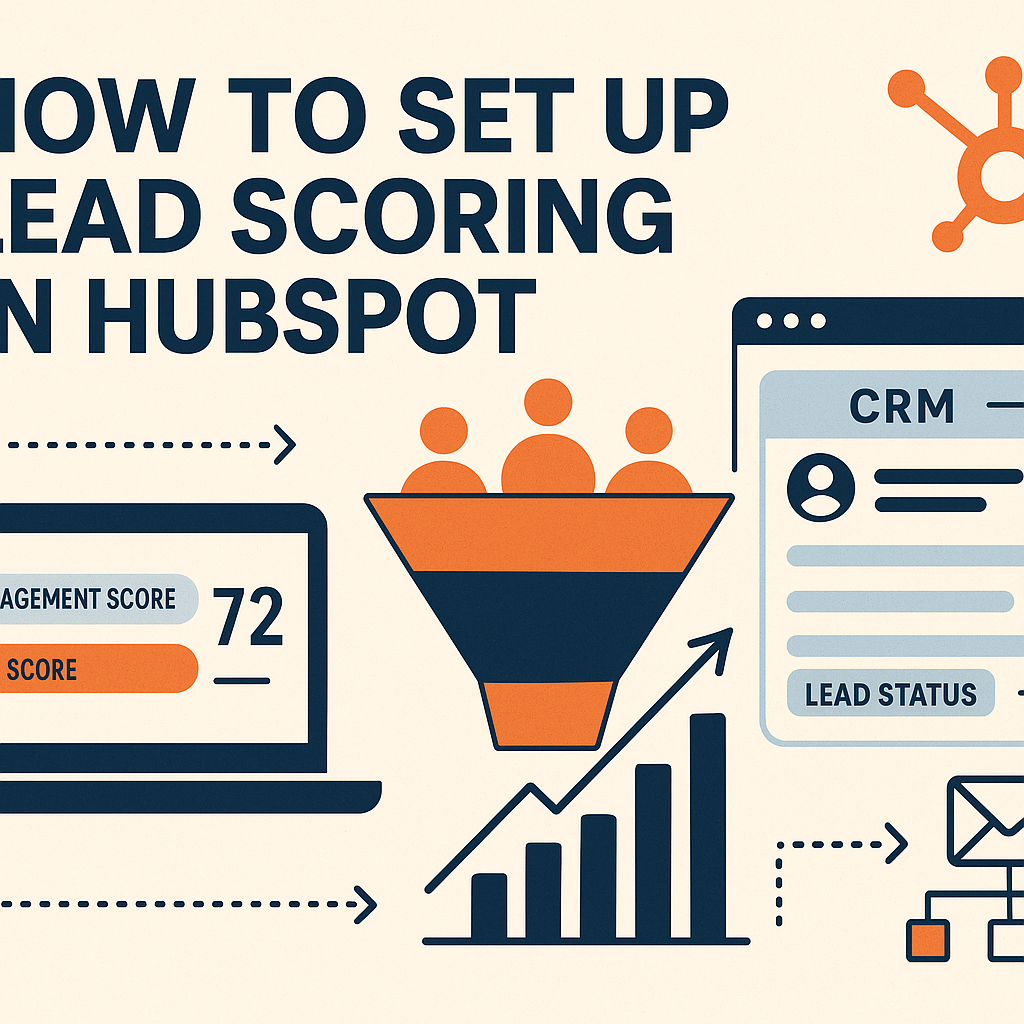
HubSpot's lead scoring guide describes scores based on record properties and actions, with availability varying by subscription and object. Check which score types your portal supports before promising a fit-and-engagement setup.
Choose signals with a reason
List candidate signals and ask why each should change the next action. A demo request may warrant faster follow-up than a general article view. A job title should not automatically outweigh clear evidence that the account cannot buy. Avoid counting several versions of the same event as independent intent. Set time windows so old activity does not permanently keep a lead at the top of a queue.
Write down the source of each property or event, its owner, and how often it updates. Missing data should be visible as missing rather than silently interpreted as low interest. Use a small, readable model first; a dozen defensible rules can be easier to operate than hundreds of speculative points.
Define the handoff
Agree on what happens when a score crosses a threshold. Who receives the lead? How quickly should they respond? What information should accompany it? How can sales reject a lead with a reason? Keep lead score, lifecycle stage, lead status, and marketing consent as separate concepts. A score can inform qualification but should not silently change the meaning of a stage.
If a workflow routes a lead, test it with duplicates, missing owners, existing customers, and contacts already in an active sales conversation. A fast automatic assignment is useful only if the right person gets the record and the team can see why.
Validate with real outcomes
Before launch, run the model on a sample of recent wins, losses, accepted leads, and rejected leads. Compare scores with what happened at the time, not information added after the outcome. Ask sales to review the top-scoring records and explain where the ranking makes sense or fails. Adjust rules based on these cases, and document the change.
After launch, monitor acceptance rate, response time, progression to opportunity, and reasons for rejection. Segment results by lead source and customer type. If a score produces many high-ranked records but few useful conversations, revisit the definition and data rather than adding more automation.
Review the model as the market changes
Schedule a regular review with sales, marketing, and RevOps. Retire signals that no longer separate useful leads from noise, and confirm that new campaigns or forms are captured correctly. A lead score is a maintained decision aid. Its value comes from a better handoff, not from the number itself.